
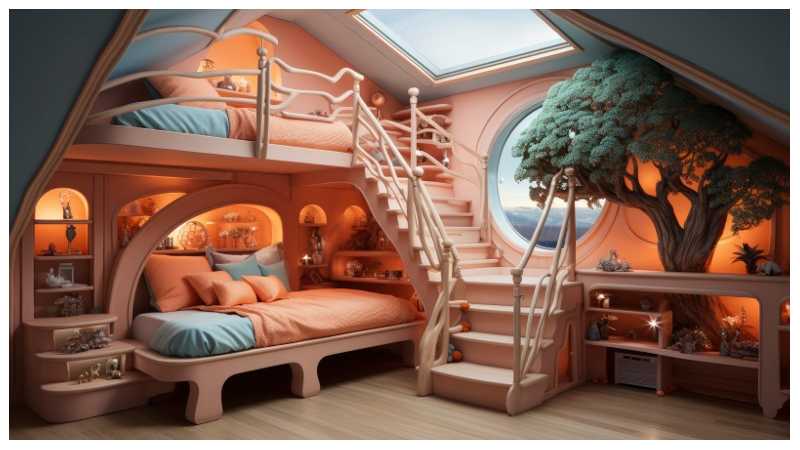
Most attics start their life as storage rooms rather than living spaces. Over the years they collect boxes, old toys, unused furniture, and seasonal decorations. Because the space sits above the main living areas, it often becomes the last place anyone thinks about improving. Yet the attic is one of the most interesting rooms a house can offer. Its angled ceilings, wooden beams, and roof windows already create a setting that feels different from the rest of the home. With thoughtful planning, that unused area can become a unique environment designed entirely for a child.
The structure of an attic creates natural character. Unlike standard bedrooms with straight walls and predictable shapes, an attic feels slightly hidden and private. Children often respond strongly to this type of environment. They enjoy rooms that feel like secret hideouts or treehouses. The irregular architecture that adults sometimes see as inconvenient often becomes the very element that makes the room magical for a child.
Before decorating or furnishing the space, practical improvements must come first. The attic floor should be checked to ensure it can safely support daily use. Older homes may require reinforcement of the floor joists so the structure can handle furniture, shelves, and active play. Proper insulation is also essential. Many attics become extremely warm in summer and cold during winter. Insulating the roof and walls stabilizes temperature and turns the attic into a comfortable room throughout the year.
Ventilation and lighting must also be upgraded. Fresh airflow prevents the room from becoming stale or humid, while additional windows or skylights allow natural light to enter the space. Electrical outlets and proper ceiling lights prepare the room for studying, reading, and creative activities. Safety features such as railings around stair openings and smoke detectors complete the preparation stage.
Once these improvements are complete, the attic stops feeling like forgotten storage and begins to reveal its true potential. Instead of boxes and dust, the room becomes a blank canvas waiting to be shaped into a space where a child can play, learn, and relax.
1. Designing Through a Child’s Eyes
Adults often design children’s rooms according to their own taste. They focus on color palettes, decorative styles, and furniture that fits the overall home design. Children, however, interact with rooms differently. For them a room is not just a place to sleep. It is a personal world where imagination, play, and learning happen every day. Designing an attic for a child therefore requires understanding how the child wants to use the space.
A good starting point is a simple conversation. Asking a child what they would like to do in the attic can reveal surprising ideas. Some children imagine a reading hideout where they can spend hours with books. Others dream about a space where they can draw, build things, or invite friends. These conversations help shape the direction of the design without forcing a strict theme that might feel outdated later.
Age strongly influences how the room should function. Younger children often prefer playful environments filled with cozy corners, small tunnels, and soft seating. Older children start to value independence and hobbies. They may want a study desk, an art station, or a small music area where they can practice instruments. Designing the room so it can evolve with the child helps the attic remain useful for many years.
Involving the child in small decisions also strengthens their connection to the room. Choosing decorations, arranging shelves, or selecting storage boxes gives children a sense of ownership. They begin to see the attic not just as another bedroom but as their personal space within the house.
When adults combine practicality with a child’s imagination, the attic becomes more than a renovation project. It becomes a shared creation that reflects both thoughtful planning and playful creativity.
2. Creating Structure Through Activity Zones
Attics often have unusual shapes and uneven walls. Without structure, furniture placement may feel random and cluttered. Dividing the space into activity zones provides order and helps the room support several types of activities. Most children’s attics benefit from three basic zones: a play area, a quiet corner, and a creative workspace.
The play area encourages movement and energy. Children naturally need space where they can stretch, climb, and move freely. Soft floor mats protect the floor while also creating a comfortable surface for play. If the attic structure allows it, a small climbing wall or rope ladder can transform the space into a mini adventure zone. These features provide physical activity without requiring a large amount of room. Because attics often contain exposed beams or sturdy vertical walls, they provide excellent anchor points for lightweight climbing equipment.
The quiet corner offers balance after energetic play. Children need a calm environment where they can relax, read, or simply spend time alone. Sloped ceilings often create low corners that might otherwise remain unused. These spaces are perfect for built-in benches filled with cushions and blankets. A small shelf for books and a soft reading lamp complete the atmosphere. If the attic contains skylights or roof windows, placing seating nearby allows natural daylight to illuminate the reading area during the day.
The creative workspace supports hobbies and learning. A sturdy desk or craft table gives children a place to draw, write, build models, or complete school assignments. Storage shelves above the desk keep supplies organized and visible. A corkboard or magnetic board mounted on the wall nearby allows children to pin sketches, diagrams, or small project plans. Seeing their ideas displayed on the wall encourages creativity and helps them track their progress over time.
By organizing the attic into these three zones, the room begins to function smoothly. Children can move from active play to quiet reading and then to creative work without the space feeling chaotic.
3. Dream Attic Ideas for Girls
Some girls enjoy rooms that feel expressive and cozy. The attic’s architecture offers many possibilities for creating spaces that feel both comfortable and imaginative. One popular approach is designing a storybook hideaway. In this design, soft colors such as cream, pale pink, or gentle lavender create a calm and welcoming environment. A canopy bed positioned under the sloping ceiling forms a small sleeping nook that feels private and safe. Bookshelves built along the angled roof line provide storage for stories and decorations while also making efficient use of space.
Another idea focuses on creativity. A studio-style attic encourages artistic exploration and hands-on projects. A large table or desk provides room for drawing, painting, or crafting. Shelves mounted above the desk keep materials visible and accessible so children can begin projects easily. Walls decorated with the child’s artwork transform the room into a personal gallery where creativity becomes part of the design.
Some children prefer an environment inspired by nature rather than decoration. In that case the attic can become a nature-inspired loft. Natural wood textures, woven baskets, and indoor plants introduce warmth and calmness into the space. Roof windows or skylights allow sunlight to enter during the day, making the room feel open and bright. Seating such as hanging chairs or hammocks creates a gentle swinging motion that many children find relaxing, especially when reading or listening to music.
Each of these ideas focuses on personality rather than strict gender stereotypes. The goal is to create an environment where the child feels comfortable expressing who they are.
4. Dream Attic Ideas for Boys
Boys often respond well to designs that encourage exploration and activity. The attic naturally supports these themes because its structure already feels adventurous. One approach is creating an explorer basecamp. Maps, travel posters, and small globes decorate the walls while wooden ladders leading to loft beds reinforce the idea of climbing into a secret headquarters. Storage trunks placed around the room provide practical organization while maintaining the adventurous atmosphere.
Another possibility is a mini sports loft. For children who enjoy movement, a small indoor sports corner can bring excitement to the attic. Foam flooring allows jumping and active play without damaging the floor. A basketball hoop mounted on one wall provides quick indoor games during rainy days. Comfortable floor cushions or bean bags offer seating for friends who come to visit.
Some children prefer problem-solving activities rather than sports. In that case the attic can become a science and building lab. A sturdy workbench placed near a window provides a place for experiments, model building, or robotics projects. Shelves above the desk store tools and materials in organized containers. Magnetic boards and cork boards mounted nearby allow children to display sketches, diagrams, or notes about projects they are developing. Adjustable desk lamps provide strong directional light that helps children see clearly while assembling small components or drawing detailed plans.
This kind of workspace encourages curiosity and patience. Over time the attic becomes a small workshop where children test ideas, build creations, and develop practical skills.
5. Designs That Work for All Children
Many attic rooms work best when they avoid gender-specific themes altogether. Instead of focusing on colors or decorations associated with boys or girls, these designs emphasize exploration and creativity.
Adventure loft beds are one example. Elevating the bed creates extra floor space underneath that can become a reading corner, small play area, or study zone. This layered structure adds excitement without requiring a large room.
Neutral wall colors provide flexibility while allowing decorations to change over time. Bright rugs, cushions, or posters introduce color and personality without dominating the design. If a child’s interests change in a few years, these accessories can easily be replaced.
Indoor tents and small forts also work well in attic environments. Children often enjoy spaces that feel hidden or enclosed. A small tent placed under a sloped ceiling can become a reading den or a quiet retreat during the day.
For siblings sharing the attic, dividing the room into separate corners helps each child maintain individuality while sharing common play areas. Modular shelves and movable desks allow the layout to adjust as children grow.
6. Lighting That Brings the Attic to Life
Lighting strongly influences how the attic feels throughout the day. Natural light should be maximized whenever possible because it makes the space feel larger and more welcoming. Skylights are particularly valuable in attic rooms because they allow sunlight to enter directly from above.
Artificial lighting should be layered to support different activities. Ceiling lights provide overall brightness so children can move around safely. Task lighting placed near desks or reading corners allows children to focus on detailed activities such as studying or drawing.
Accent lighting adds character to the room. LED strips installed along beams or shelves highlight architectural details that make the attic unique. Decorative lighting such as small star projectors or soft string lights can create a calming atmosphere before bedtime.
When lighting is planned carefully, the attic transforms from a dim storage area into a warm and inviting environment where children enjoy spending time.
7. Storage That Keeps the Room Organized
Children’s rooms can quickly become cluttered if storage is not planned carefully. Attics offer many opportunities to create built-in storage solutions that keep the room tidy.
Low areas beneath sloped ceilings often remain unused because standard furniture does not fit well there. Custom drawers or cabinets installed in these spaces turn them into practical storage zones for toys, books, and clothing. Benches with hidden compartments provide both seating and storage without occupying additional space.
Wall-mounted shelves reduce the need for bulky cabinets while keeping the floor open for play. Transparent bins or labeled boxes help children recognize where their belongings belong. When the storage system is easy to understand, children are more likely to maintain it themselves.
Some families also include durable storage pieces made from commercial furniture, such as compact locker cabinets or sturdy shelving units. These pieces withstand heavy daily use while keeping sports equipment, school bags, and hobby supplies neatly organized.
Thoughtful storage protects the room’s design and ensures that the attic remains a comfortable place rather than becoming another cluttered storage area.
8. Personal Touches That Complete the Dream
The final stage of the attic transformation focuses on small details that make the room truly personal. Decorative elements chosen by the child give the space meaning and emotional value.
Wall murals reflecting the child’s interests can add character. Some families paint stars across the ceiling, forests along the walls, or abstract patterns that change the mood of the room. Name signs above the bed reinforce the child’s sense of ownership and identity.
Memory boards allow children to display photographs, drawings, and achievements from school or hobbies. Over time these boards become visual records of childhood moments. Hidden compartments or secret shelves can add an element of surprise that children find exciting.
Allowing the child to participate in the final decorating stage completes the transformation. When they help arrange decorations, place books, or choose accessories, the attic becomes more than a renovated room. It becomes their world.
A dusty attic can easily remain a forgotten part of the house. Yet with thoughtful planning and creativity, that hidden space can evolve into a dream environment where children read, play, learn, and grow.