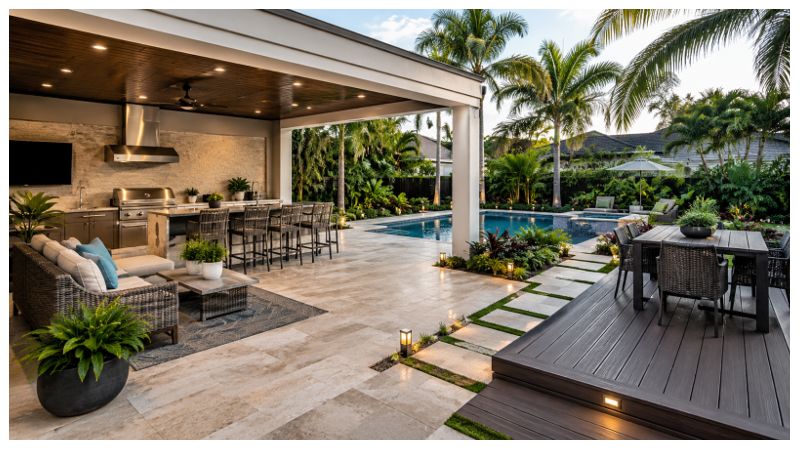
Florida backyards are more than patches of grass behind a house. With warm temperatures for much of the year, they often become extensions of the indoor living space—complete with patios, outdoor kitchens, pools, dining areas, fire features, and shaded lounges. However, Florida’s intense sunlight, humidity, heavy rain, and occasional tropical storms can quickly expose materials that were not designed for the climate.
If you are searching for backyard renovation near me, choosing the right materials should be one of your first priorities. Attractive finishes are important, but durability, maintenance, heat resistance, drainage, and moisture performance can have an even bigger impact on how your renovated backyard performs over time.
Why Florida Climate Matters During a Backyard Renovation
Florida outdoor spaces experience conditions that can be demanding on construction materials. Summer temperatures regularly climb above 90°F, while high humidity can encourage mold, mildew, corrosion, and wood deterioration.
Florida also receives roughly 50 inches or more of rainfall annually in many areas, depending on location. That means patios, walkways, outdoor kitchens, and pool decks need materials capable of handling repeated exposure to water.
When evaluating backyard renovation near me options, homeowners should therefore look beyond appearance and consider how each material reacts to heat, UV exposure, moisture, and frequent use.
Porcelain Pavers for Modern Outdoor Spaces
Porcelain pavers have become a popular choice for contemporary Florida backyards because they combine a clean appearance with relatively low maintenance.
Unlike some porous materials, outdoor-rated porcelain absorbs very little moisture. This makes it useful around pools, patios, and outdoor dining areas where spills and rain are common.
Porcelain is also available in finishes designed to resemble natural stone, concrete, or wood. Homeowners can achieve a high-end appearance without dealing with some of the maintenance requirements associated with the original material.
Best Uses for Porcelain
Porcelain works particularly well for:
- Covered and uncovered patios
- Pool decks
- Outdoor kitchens
- Walkways
- Dining and entertainment areas
For wet locations, selecting textured or slip-resistant outdoor porcelain is especially important.
Concrete Pavers for Flexible Backyard Designs
Concrete pavers remain one of the most practical choices for Florida outdoor living spaces.
They come in numerous sizes, patterns, textures, and colors, allowing homeowners to create everything from traditional patios to modern geometric designs. Individual pavers can also be replaced if one becomes damaged, which can make future repairs easier than replacing a large section of poured concrete.
For homeowners researching backyard renovation near me, pavers are often worth considering when drainage and flexibility are priorities.
Proper installation is essential. A professionally prepared base helps reduce shifting, settling, and uneven surfaces as weather conditions change.
Travertine for Pool Decks and Luxury Patios
Travertine has long been associated with upscale Florida pool areas and Mediterranean-inspired outdoor spaces.
One advantage is its ability to remain relatively comfortable underfoot compared with some darker paving materials exposed to direct sunlight. Its naturally textured surface can also provide useful traction around pools when an appropriate finish is selected.
Because travertine is natural stone, sealing and maintenance may be recommended to reduce staining and moisture absorption.
Its neutral cream, beige, and light brown tones pair particularly well with blue swimming pools, green landscaping, and tropical backyard designs.
Composite Decking for Low-Maintenance Outdoor Living
Wood decks provide warmth and character, but Florida humidity can create maintenance challenges. Traditional wood may require regular staining, sealing, or repairs as it is exposed to moisture and sunlight.
Composite decking offers an alternative.
Many modern composite products combine wood fibers with synthetic materials to improve resistance to moisture, insects, and decay. They generally require less maintenance than traditional wood and do not need frequent staining.
Composite decking can be useful for raised patios, seating platforms, outdoor lounges, and backyard transitions.
Homeowners should still compare heat ratings because darker decking can become noticeably warmer during Florida afternoons.
Aluminum for Pergolas and Outdoor Structures
When homeowners imagine backyard renovation materials, flooring often receives most of the attention. Structural materials matter just as much.
Aluminum can be a practical choice for pergolas, patio covers, screen structures, and outdoor framing because it does not rot like wood and offers strong resistance to corrosion when properly finished.
Powder-coated aluminum is especially common in Florida because it provides an additional protective surface while allowing homeowners to choose colors that complement the architecture of their home.
Stainless Steel for Outdoor Kitchens
Outdoor kitchens face constant exposure to moisture, grease, heat, and changing temperatures.
For cabinets, grills, sinks, and appliances, stainless steel is one of the most reliable options. Grades such as 304 stainless steel are frequently used in outdoor environments because of their corrosion resistance.
Coastal homeowners may need to pay particular attention to material grades because salty air can accelerate corrosion.
Stone, porcelain, or outdoor-rated engineered surfaces can then be used for countertops depending on the desired style and exposure conditions.
Artificial Turf for Easier Lawn Maintenance
Artificial turf can help homeowners create usable green areas without maintaining a traditional lawn.
It is increasingly used around patios, play spaces, stepping-stone pathways, and entertainment areas. A properly installed system should include an effective drainage base so Florida rainwater does not remain trapped underneath the surface.
Artificial turf can also reduce mowing and watering requirements, although occasional cleaning and brushing may still be necessary.
Light-Colored Materials Can Help Reduce Surface Heat
Color deserves careful attention when selecting backyard materials.
Dark pavers, decking, and stone absorb more solar energy and may become uncomfortable during peak afternoon temperatures. Lighter beige, tan, cream, and gray finishes generally reflect more sunlight and can help create a more comfortable walking surface.
This difference becomes particularly important around pools where people frequently walk barefoot.
Choosing Materials for Your Backyard Renovation
There is no single material that works perfectly for every Florida property. The right combination depends on how the space will be used.
A pool-focused backyard might combine travertine or porcelain with aluminum screening. An entertainment-focused design could include concrete pavers, a stainless-steel outdoor kitchen, and composite decking beneath a pergola.
Drainage, shade, maintenance expectations, budget, and existing architecture should all influence the final decision.
Find the Right Backyard Renovation Near Me
Searching for backyard renovation near me is about more than finding someone who can install a new patio. A successful Florida backyard requires materials selected specifically for heat, humidity, rainfall, UV exposure, and everyday outdoor living.
Porcelain pavers, concrete pavers, travertine, composite decking, aluminum, stainless steel, and artificial turf can all provide excellent results when used in the right locations.
By prioritizing climate-resistant materials during the planning stage, homeowners can create outdoor spaces that look attractive while remaining easier to maintain year after year. The result is a backyard designed not simply for appearance, but for the realities of Florida living.